What is a combustion leak test?
A combustion leak test, also known as a block test, is a simple diagnostic procedure used to check whether exhaust gases are leaking into the engine's cooling system. It's one of the most reliable ways to detect a blown head gasket, a cracked cylinder head, or, less commonly, a cracked engine block.
How does a combustion leak test work?
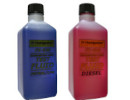
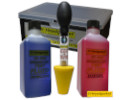
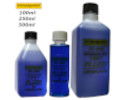
The test uses a special red or blue chemical fluid inside a clear plastic tester that fits over the radiator neck or coolant expansion tank.
Red more sensitive fluid, modern alternative to blue one. With better sensitivity and excellent colour transition.
When the engine is running:
- The tester is placed on the radiator or coolant reservoir.
- A hand bulb draws air from the cooling system through the test fluid.
- If combustion gases (carbon dioxide) are present, the chemical reacts and changes colour.
Is it accurate?
A combustion leak test is generally very reliable when performed correctly, especially if the engine is already showing symptoms such as:
- Unexplained coolant loss.
- Persistent overheating.
- Continuous bubbles in the coolant reservoir.
- White exhaust smoke.
However, a negative result doesn't completely rule out a head gasket leak, particularly if the leak is very small or only occurs when the engine is under heavy load.
Can you do it at home?
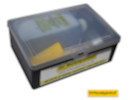
Yes. DIY combustion leak test kits are widely available and typically cost £15–£40. The test usually takes 10–15 minutes and requires only basic mechanical knowledge.
Important: Never remove the radiator cap while the engine is hot. Always allow the engine to cool completely before opening the cooling system, as hot coolant is under pressure and can cause serious burns.
A positive combustion leak test is one of the strongest indicators of an internal engine fault and is often followed by a compression test or cylinder leak-down test to identify which cylinder is affected.